
 By
By 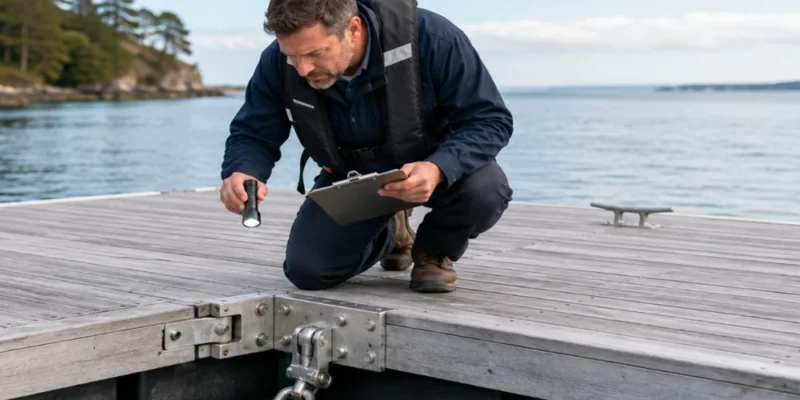
A floating dock moves with changing water levels, waves, wakes, and wind. This flexibility is one of its main advantages. It also means every part of the dock faces repeated movement and stress.
Small problems often begin at connection points, fasteners, flotation units, or anchors. If left alone, they might spread to other parts of the structure. Regular inspections help owners find early damage, plan repairs, and keep the dock safe for everyday use.
Start With the Walking Surface
Walk across the entire dock and pay attention to how the surface feels. The deck should feel firm and reasonably level. Excessive movement, soft areas, or sudden changes in height might point to weakened framing or damaged flotation underneath.
Inspect boards or panels for cracks, rot, warping, and loose edges. Look for raised screws and other fasteners that create tripping hazards. Wood decking often shows splitting or decay near fastener holes. Composite materials might develop cracks around connections or shift when clips become loose.
Surface damage does not always mean the structure is failing. Still, it might expose the framing below to additional water and stress.
Check the Frame and Structural Members
The frame carries the weight of the deck, people, furniture, and equipment. Inspect accessible beams, joists, and cross members for bending, cracks, rust, or decay.
Pay close attention to areas where structural members meet. These joints carry repeated loads as the dock moves. Gaps between sections, twisted framing, or unusual movement might show that a connection is weakening.
Wooden framing should remain solid without deep cracks or soft areas. Metal framing should not have severe corrosion, bent sections, or broken welds.
Inspect All Connection Hardware
Bolts, brackets, hinges, pins, and couplers hold dock sections together. These parts allow controlled movement while keeping the structure aligned.
Look for missing hardware, loose nuts, enlarged bolt holes, worn hinge pins, and bent brackets. Metal-to-metal contact might slowly wear connection points down. Rust stains around a fastener often signal early corrosion.
Moveable connections need enough freedom to operate, but they should not feel sloppy. Excessive space between parts might create strong impacts when waves move the dock.
Hardware exposed to saltwater deserves closer attention because salt speeds up corrosion.
Examine the Flotation System
Flotation units help the dock remain level and support its intended load. Inspect every visible float for cracks, punctures, crushed areas, loose mounting hardware, or signs of water inside.
A dock that sits lower on one side might have a damaged float or uneven weight distribution. Owners should also watch for changes in freeboard, which is the distance between the water and the top surface of the dock.
Marine growth around floats adds weight and might hide damage. Heavy buildup also affects how water moves beneath the dock.
Never drill into a sealed float to check it. Even a small hole might allow water to enter and reduce buoyancy.
Review Anchors, Pilings, and Guides
The anchoring system keeps the dock in position while allowing it to rise and fall. Depending on the design, the system might include pilings, chains, cables, anchors, stiff arms, or slide guides.
Inspect chains and cables for corrosion, stretching, and worn links. Check piling hoops and rollers for cracks, binding, or excessive space. Connections to seawalls or fixed structures should remain tight and properly aligned.
A dock that shifts farther than usual or sits at an angle might have a damaged anchor connection.
Look at Utilities and Accessories
Electrical lines, water pipes, ladders, cleats, bumpers, and railings also affect safety. Loose accessories place extra stress on the surrounding deck and frame.
Check whether cleats remain firmly attached before securing a boat. Inspect ladders and railings for movement or corrosion. Electrical equipment near water should receive inspection from a qualified professional when damage, loose components, or moisture appears.
Inspect After Severe Weather
Strong winds, waves, storm surge, floating debris, and changing water levels might damage a dock in a short time. Inspect the structure after severe weather, even if it looks normal from shore.
Document damaged areas with photographs and keep a record of completed repairs. Comparing inspection notes over time helps reveal gradual movement, corrosion, or changes in buoyancy.
A floating dock is a connected system. One failing bracket or float places more stress on the parts around it. Routine inspections help owners address small weaknesses before they affect the safety and structural integrity of the entire dock.
This post was written by a professional at Supreme Marine Floating Docks. Supreme Marine Floating Docks is dedicated to providing top-quality floating docks and marine accessories that combine durability, innovation, and superior performance. While we are a new brand, our team brings over 50 years of combined industry experience, making us a trusted name in the marine world. We are passionate about designing and delivering products that meet the highest standards, ensuring reliability and longevity in all marine environments. Whether for residential, commercial, marina docks Miami, our docks are crafted with precision and care, setting a new benchmark in the industry. At Supreme Marine, we don’t just build docks-we create lasting solutions.






Comments