
 By
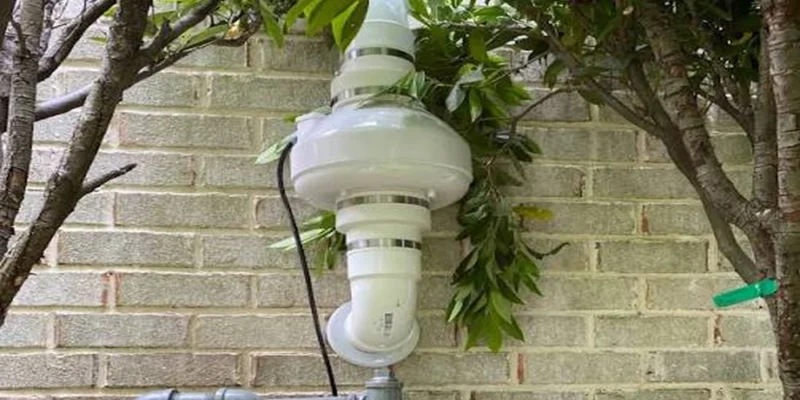
Plenty of Stark County homes came with a white pipe already running up the side of the house when the current owners moved in. Nobody explained it at closing beyond a line in the inspection report, and the small gauge on the pipe in the basement became part of the scenery, as forgettable as the water meter.
That pipe is doing real work, or it is supposed to be. A radon system has one moving part, runs every hour of every day, and gives almost no warning when it starts to fade. The gas it removes cannot be seen or smelled, so a tired system and a healthy one look exactly alike from the living room.
Owners who want a second opinion on an aging setup usually end up talking to someone who builds these systems for a living. For anyone weighing radon mitigation in Canton, genesisradon.com belongs to a North Canton specialist licensed by the Ohio Department of Health as RS256 and RC287, in business since 2008, with experience bringing down levels as high as 350 pCi/L and a client list that spans homeowners, home builders and real estate agents, plus both interior and exterior system designs.
What follows is a way to check an existing system yourself, and to know when it needs more than a glance.
The Gauge Nobody Reads
Most active systems carry a U tube manometer, a small clear tube bent into a U and filled with colored liquid. When the fan pulls on the pipe, the liquid sits higher on one side than the other. That difference is the system’s pulse.
Ohio’s mitigation standards require installers to mark the reading the gauge showed on the day the system was switched on. Find that mark, if it exists, and compare. A few observations tell a lot.
If the liquid sits level on both sides, the fan has stopped or lost power. Check the breaker and the outdoor disconnect before assuming the worst.
If the reading has crept noticeably higher than the original mark, something may be restricting airflow. Ice at the discharge, debris, or water pooled in a low spot of pipe can all choke a system.
If the reading has drifted lower, the fan may be wearing out, or a joint somewhere may be leaking and pulling air from the basement instead of from under the slab.
None of these readings replaces a radon test, but a five second look each month catches most failures long before a test would.
Sounds That Mean Something
A healthy radon fan produces a steady, low whir. Changes in that sound are worth noticing. Rattling often points to a loose mounting or a fan bearing beginning to fail. A new whistle can mean a crack in the pipe or a gap at a coupling. Silence, obviously, is the worst sound of all.
Many radon fans carry warranties around five years, and plenty of them keep spinning well past ten. Age alone is not a reason to replace one, but a fan that has run for a decade and has started making new noises is telling its owner something.
When the House Changes Around the Pipe
A system tuned for a house as it stood years ago can lose ground when the house changes. The Ohio Department of Health suggests retesting every two years and after any significant renovation, and some upgrades shift the balance more than owners expect. Common culprits include these.
- Tighter windows, doors and insulation. Sealing the upper house can change how strongly the building pulls soil gas through the foundation.
- A new furnace or air conditioner. Different equipment moves air differently, and a powerful return duct in the basement can increase suction at the slab.
- Finishing the basement. New walls can hide cracks that once were sealed and make it easy to box in a pipe or gauge where no one looks at it.
- Sump pump replacement. A plumber swapping a pump may break the airtight lid seal and never reseal it.
- Fresh cracks in the slab. Concrete keeps moving for years, and cracks that open after installation give radon new paths around the system.
Inherited Systems and Their Paper Trail
Buyers often inherit a system with no history attached. Ohio requires licensed installers to give clients a package that includes a floor plan drawing of the system, pre and post mitigation test results, and the installer’s license numbers. If that package never made it to the new owner, the original company may still have the records.
Two things are worth checking on any inherited system. The first is the fan location. Current Ohio standards forbid fans in basements, crawlspaces and conditioned living space, but systems installed before those standards took effect sometimes put the fan indoors, where a leak on its pressurized side would push gas straight into the house. The second is the discharge point. Older systems occasionally vent near windows or below the roofline, which today’s rules do not allow.
Some newer homes also hold a passive pipe roughed in by the builder and never connected to a fan. It can look like a finished system while doing very little on its own.
Repair, Replace or Rebuild
Swapping out a worn fan for a matching new one counts as maintenance under Ohio rules. Altering the system is different. Once a licensed contractor changes the design, the whole system has to be brought up to current standards. A licensee who services a system that falls short of those standards is also required to tell the owner in writing.
In practice this means a simple fan replacement can turn into a larger conversation if the original installation had problems. That is not a sales trick. It is the state asking contractors not to leave a known shortcut in place once they have touched it.
Testing Without a Conflict
The reading that matters most comes from an actual radon test placed in the lowest lived in level of the home. Researchers at Ohio State’s College of Public Health note that homeowners worried about a conflict of interest can hire a licensed tester who has no connection to a mitigation company, and that independence is especially useful when deciding whether an older system needs work.
A system that tests well below the 4 pCi/L action level, holds its gauge reading and runs with a steady hum is earning its keep. One that fails any of those checks deserves attention now, while the fix is still a small one, rather than years from now when the gas has had all that time to collect unnoticed in the rooms where the family spends its days.








Comments