
 By
By 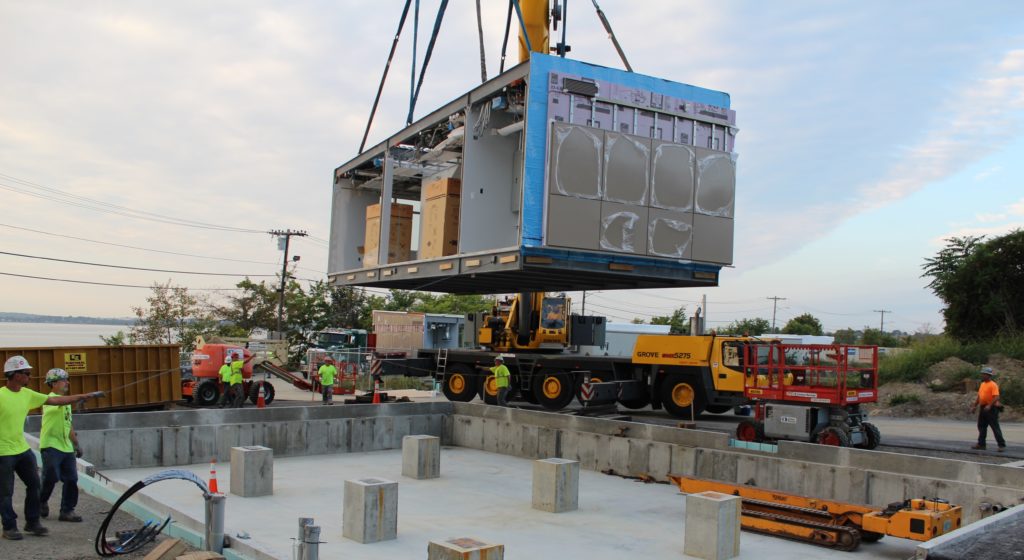
Every general contractor in metro Detroit has the same story. The project is permitted, the financing is in place, the owner is ready to break ground, and the schedule depends on framing starting in three weeks. But the framing crew isn’t available for six. The electricians are booked through the quarter. The finished carpenters are juggling four jobs at once and none of them are getting their full attention. The skilled labor shortage in southeast Michigan’s construction industry isn’t a forecast anymore. It’s the daily operating reality, and it’s adding weeks to schedules and thousands to budgets on projects across the region. Element Restoration has built our approach around a direct response to this problem: prefabricated construction methods that shift work from the jobsite, where labor is scarce and conditions are unpredictable, to a manufacturing environment where productivity is higher, output is more consistent, and the same workforce produces significantly more installed work per hour.
The labor shortage isn’t going away. The question is whether the industry adapts its methods to match the workforce it actually has.
The Numbers Behind the Shortage
The construction workforce in Michigan is older than it’s ever been. According to data from the Bureau of Labor Statistics and industry surveys conducted by the Associated General Contractors of America, the median age of a construction worker in the United States is now over 42, and the percentage of workers over 55 has been climbing steadily for a decade. Retirements are accelerating. The generation that built metro Detroit’s commercial and residential stock through the 1990s and 2000s is leaving the industry, and the incoming generation is smaller.
Apprenticeship programs exist and they’re doing important work, but the pipeline they produce doesn’t match the outflow. For every experienced journeyman who retires, the apprenticeship system replaces roughly half a worker in terms of capacity and skill level. The apprentice needs years of field experience before they’re operating at the productivity level of the worker who left. During that gap, the industry has fewer capable hands doing the same volume of work, and the result is exactly what southeast Michigan is experiencing: longer timelines, higher labor rates, and a competitive scramble for every available crew.
The problem is compounded by the volume of construction activity in the region. Detroit’s revitalization, suburban commercial development, infrastructure investment, and the ongoing demand for multi-family housing have created a project pipeline that would strain the workforce even at full capacity. At reduced capacity, something has to give. On most projects, what gives is the schedule.
Why Throwing Money at the Problem Doesn’t Work
The instinctive response to a labor shortage is to pay more. And labor rates have risen, significantly, across every trade in southeast Michigan over the past five years. But higher wages haven’t solved the problem for two reasons.
First, paying more per hour doesn’t create more workers. The total number of available skilled tradespeople in the region is relatively fixed in the short term. When one GC raises rates to attract a framing crew, they’re pulling that crew from another GC’s project, not drawing a new crew into the market. The net capacity of the regional workforce doesn’t change. The cost just increases for everyone.
Second, the shortage isn’t purely about compensation. It’s about demographics and career pipeline. Young workers who might have entered the trades twenty years ago are choosing other paths, and the industry’s efforts to recruit them are competing against sectors that offer indoor work, predictable schedules, and lower physical demands. The wage increases are necessary to remain competitive, but they’re not sufficient to rebuild the workforce to its pre-recession levels.
The construction industry needs to accomplish more with the workforce it has. That’s the fundamental case for prefabrication.
How Prefabrication Changes the Labor Equation
Prefabricated construction doesn’t eliminate skilled labor. It restructures when and where that labor is deployed, and it dramatically improves the ratio of installed output to labor hours.
In a traditional construction model, skilled workers perform their tasks on-site, exposed to weather, working on uneven surfaces, moving between floors and zones, waiting for other trades to clear areas, and adapting constantly to field conditions. Productivity studies consistently show that on-site construction labor operates at roughly 40 to 60 percent efficiency when measured against theoretical capacity. The remaining time is consumed by material handling, travel within the site, waiting, rework, and environmental interruptions.
In a manufacturing environment, those inefficiencies shrink dramatically. Workers are stationary at assembly fixtures. Materials are staged within arm’s reach. Weather doesn’t exist. The work is repetitive enough to build speed and muscle memory, but varied enough to require genuine skill. Quality control happens in real time rather than after the fact. Productivity in a controlled fabrication environment runs at 70 to 85 percent efficiency, which means the same worker produces substantially more installed work per hour in the shop than they would in the field.
When those prefabricated components arrive on-site, the field installation crew is smaller, faster, and less dependent on the deep experience that’s becoming harder to find. Setting a pre-assembled wall panel requires skill, but it’s a different kind of skill than measuring, cutting, and assembling that same wall from raw material in the field. The installation task is more standardized, more predictable, and more trainable, which means workers with less field experience can contribute productively to the installation sooner than they could contribute to a stick-built scope.
How Element Restoration’s Detroit Manufacturing Facility Addresses the Shortage
Element Restoration operates an in-house manufacturing facility in Detroit where we fabricate panelized light gauge metal framing systems for commercial, multi-family, and institutional projects. The facility is the practical application of everything described above. We roll-form our own steel profiles, cut and punch studs to specification, and assemble complete wall panels on fixtures that enforce dimensional accuracy.
The labor advantage operates at two levels. Inside the facility, our fabrication team produces wall panels at a rate that would require a significantly larger field crew to match using stick-built methods. The controlled environment, the purpose-built tooling, and the repetitive workflow create efficiencies that a jobsite simply can’t replicate. On-site, our installation crews or the GC’s framing subcontractors set panels that arrive ready for installation, which means the field labor requirement is a fraction of what a stick-framed scope would demand.
For a general contractor trying to staff a project in a tight labor market, the difference is practical and immediate. Instead of needing eight skilled framers for four weeks, the project might need four installers for two weeks. The total labor cost is lower, the schedule is shorter, and the GC isn’t competing with every other project in the region for the same scarce crew.
The Quality Argument That Follows the Labor Argument
A workforce stretched thin doesn’t just slow projects down. It affects quality. Crews working overtime on multiple projects simultaneously make more mistakes. Framers who are rushing to finish one job so they can start the next are less careful about stud spacing, plumb, and square than framers working at a sustainable pace with adequate time. The result is walls that need shimming during drywall, exterior cladding that doesn’t sit flat, and finish work that reveals the framing irregularities underneath.
Prefabrication addresses this directly. Panels fabricated on fixtures in a controlled environment hold tighter tolerances than field-framed walls. The dimensional accuracy is built into the process, not dependent on the attentiveness of a fatigued crew at the end of a long week. When the panels arrive on-site, they’re straight, square, and consistent, which means every trade that follows, from the insulation installer to the drywall hanger to the exterior cladding crew, starts with a better substrate and produces better finished work as a result.
The quality improvement isn’t incidental. It’s structural, and it persists across every project regardless of how stretched the regional labor market becomes, because the fabrication environment insulates the work from the pressures that degrade quality on conventional jobsites.
This Isn’t About Replacing Workers. It’s About Respecting Their Time.
The skilled tradespeople working in southeast Michigan’s construction industry are doing demanding work under difficult conditions. Prefabricated construction doesn’t devalue that work. It reorganizes it so that every hour of skilled labor produces more finished building than the traditional model allows. The workers spend less time handling material, less time waiting, less time reworking field errors, and more time doing the productive work they were trained for. The industry gets more building per labor dollar. The workers get a more efficient, more predictable work environment. The owners get shorter schedules and more consistent quality.
Element Restoration’s panelized metal framing systems are designed around this principle. If you’re a developer or general contractor in southeast Michigan planning a commercial, multi-family, or institutional project and you’re concerned about labor availability, schedule risk, or framing quality, contact our team. We’ll walk you through how our prefabrication process fits your project, what the labor and schedule implications look like compared to stick-built, and how our Detroit facility can keep your framing scope off the critical path. The workforce has changed. The methods should change with it.








Comments