
 By
By 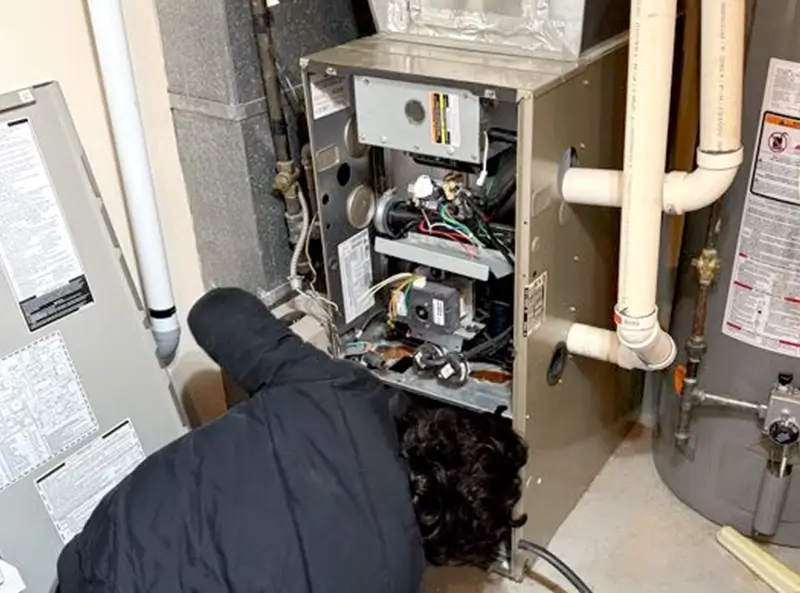
Your heating system is one of the most significant features of your house. It works very hard during the cold weather. A tune-up is a way of getting it ready to take months of heavy use. But most homeowners are not sure what that service actually entails.
Here is what a furnace tune-up covers.
A complete safety and performance check
A thorough inspection is one of the initial tasks a technician performs during a tune-up. This includes:
- Inspecting the general state of your furnace
- Searching for signs of wear or damage.
The technician will check parts that may result in severe safety hazards, including:
- The heat exchanger
- The burner assembly
- Electrical connections
- Gas lines.
Common issues include:
- Loose wiring
- Misplaced flow of gas
- Defective components.
The goal is to identify these problems before they become major issues.
Cleaning critical components
With time, debris can accumulate in your heating system. During furnace tune-ups, technicians remove and clean vital parts. This often includes:
- The burner, to allow good ignition and even burning.
- The blower assembly, so that the air circulates in your house.
- The flame detector, which assists the furnace in operating safely.
Cleaning these components goes a long way. It:
- Enhances airflow
- Improves performance
- Reduces the pressure on the system.
Adjusting the burner and gas pressure
The system depends on the correct ratio of air and gas to generate heat. During a tune-up, the burner is calibrated to be able to combust. The technician can also test and adjust gas pressure to the manufacturer’s requirements.
These modifications assist your furnace in burning fuel efficiently. This makes it efficient and prevents the possibility of:
- Soot formation
- Uneven heating.
Testing controls and safety measures
This service also involves checking your furnace controls and safety systems. This includes ensuring that:
- The thermostat communicates effectively with the furnace
- The system adjusts to temperature changes appropriately.
Technicians check several safety parts, such as:
- Limit switches
- Ignition systems
- Shut-off mechanisms.
These parts prevent overheating or unsafe functioning. The inspections are necessary to safeguard your home.
Confirming the airflow and filter condition
Testing the airflow is necessary. It ensures that there are no obstacles that prevent warm air from reaching your rooms.
This service also involves checking the air filter. If it is dirty, the technician will suggest a replacement.
The right circulation of air prevents the need to spend much on energy. It keeps the temperatures at a consistent level.
Final performance review
The final part of the tune-up is a complete heating cycle. It proves that all the adjustments were effective. The system should start and warm up without any issues.
A reliable technician will provide a report on the status of the furnace. They will recommend what to do to maintain the furnace.
Wrapping up
A furnace tune-up is a full-service procedure. It involves inspecting, cleaning, and adjusting key components. It achieves the following:
- Keeps your furnace running more efficiently
- Makes it safer
- Minimizes potential surprises during the coldest months of the year.








Comments